The Tinned-Pea Oracle: Why Britain's Corner Shops Are National Treasures
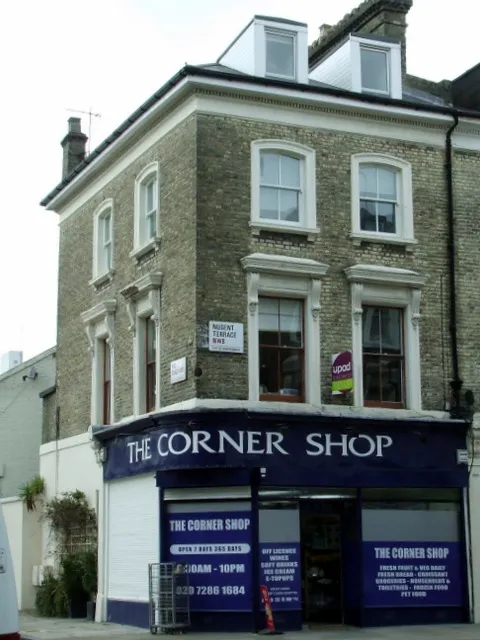
Photo: Thomas Nugent , CC BY-SA 2.0, via Wikimedia Commons
There is a particular kind of British magic that happens when you walk into a corner shop at 7:42am and the person behind the counter already knows you are going to buy a pint of milk, a scratch card and a packet of prawn cocktail crisps, and has begun reaching for them before you speak. It is not efficiency. It is something closer to prophecy.
The British corner shop is an unsung institution. It is not the supermarket, with its sixteen aisles and its self-checkout machines that shout 'unexpected item in bagging area' like a disappointed headteacher. It is a small room with a big personality, a fridge that hums aggressively and a shelf of tinned goods that raises more questions than it answers. We love it. We need it. We should probably stop taking it for granted.
The Aisle of Mystery
Let us begin with the tinned goods. No corner shop has ever been shortlisted for an award for coherent stock management, and thank goodness for that. Where else can you buy a tin of peas, a tin of peas with a slightly different label, a tin of peas that appears to have been there since the reign of a previous monarch, and a tin of something called 'vegetable medley' that looks like it was assembled by a committee of ghosts?
The beauty is the lack of choice. The supermarket gives you twenty-five types of pasta sauce and you leave with none. The corner shop gives you one type of pasta sauce, positioned next to a jar of pickled eggs and a birthday card for a great-aunt, and you leave feeling like you have solved a puzzle. You have not solved anything. You have simply bought some sauce and a card. But it felt like a victory.
Then there is the crisps wall. It is not a shelf; it is a wall. It is a monolith of salt and vinegar, cheese and onion, and at least one flavour that has no business existing. The corner shop is where you discover that you do, in fact, need to try 'marmite and cheddar' crisps at 9pm on a Tuesday. It is where you accept that the best-before date is more of a suggestion. It is where you learn that a packet of crisps can be a meal if you believe in yourself.
Opening Hours: A Theoretical Framework
The sign says 'Open 7am–8pm'. This is not a fact. It is a rumour. Some days the shop opens at 7:15am because the owner had to drop a child at school. Some days it closes at 6pm because the owner had a dentist appointment. Some days it is closed entirely because it is a Tuesday and the owner's uncle is visiting from Leicester. You cannot predict it. You can only accept it.
This is not bad service. This is a lifestyle. The corner shop is run by a human being, not a rota algorithm. If the owner is having a difficult day, the shop is having a difficult day. If the owner has decided to sell homemade samosas from a tray by the till, the shop has suddenly become a restaurant. If the owner's dog is asleep in front of the fridge, you will step over the dog. The dog has seniority.
There is a special kind of trust in a shop that does not reliably open on time. You plan your trip. You allow a buffer. You arrive and see the shutter half-up and think, 'Ah, not today.' And yet you go back tomorrow, because the alternative is walking twelve minutes to a supermarket where nobody knows your name and the self-checkout machine is still shouting at you.
The Gossip Economy
Forget social media. The corner shop is the original local network. It is where you find out that Mrs Patel's son has passed his driving test, that the builder on the corner is 'a lovely man but you wouldn't let him do your wiring', and that the parish council is 'in chaos' because someone proposed changing the bin collection day. The shopkeeper is not a gossip. The shopkeeper is a curator.
You go in for a loaf of bread and leave with a briefing on the entire street. Not in a sinister way. In a 'did you know the woman at number fourteen has got a new gate' way. It is community information, delivered with a side of chewing gum and a nod towards the fridge. The corner shop is the village noticeboard, the local radio station and the confessional, all in a room the size of a decent wardrobe.
Why We Need Them More Than Ever
In 2026, it is easy to do everything without leaving the house. You can order groceries, coffee, a new sofa and a small existential crisis from your phone. But you cannot order the feeling of walking into a shop where the owner says, 'Your usual?' You cannot order the sight of a display of novelty lighters shaped like sausages. You cannot order the low-level chaos of a shop that has one mop, fourteen types of tinned pea and a fridge that sounds like it is trying to start a car.
We are not saying corner shops are perfect. Some are tired. Some are overpriced. Some have a smell that is hard to identify and impossible to forget. But they are ours. They are the small, strange, human bits of Britain that supermarkets smoothed out decades ago.
So here is the callout. Tell us about your corner shop. The weirdest one. The friendliest one. The one that is open at 6:45am for no obvious reason and sells a single banana for 18p. The one where the owner knows your dog's name but not yours. The one that has somehow survived three recessions, two roadworks and a very determined Tesco Express.
Nominate your local legend. We will not be able to visit them all. But we will think about them fondly, and we will probably buy a packet of crisps on the way home.