The Jam-Jar Jurisdiction: Life Among Britain's Tombola Hardliners
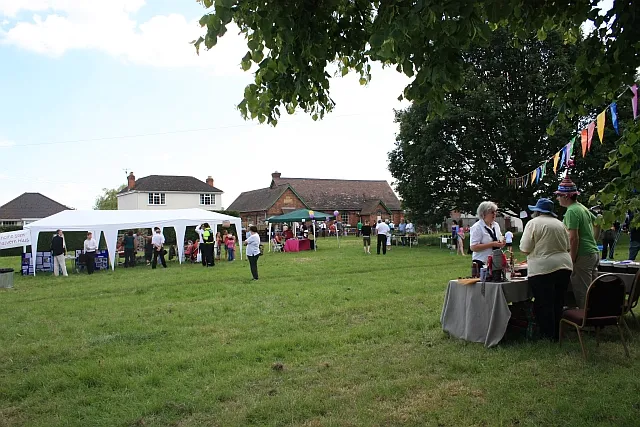
Photo: Bob Embleton, CC BY-SA 2.0, via Wikimedia Commons
Every village fete has the same geography. Bunting overhead, a bloke in a scout hut apron doing burgers at a temperature that can only be described as 'optimistic', and a slight smell of wet grass rising from the bouncy castle. But follow the crowd past the plant stall and you'll find the true centre of gravity: a pasting table, a washing-up bowl of folded tickets, and a sign written in biro that says EVERY TICKET WINS in a tone that suggests it is not so much a promise as a legal position.
This is the tombola. And Britain has never quite got over it.
The five-pound note that launched a thousand sulks
The premise is almost insultingly simple. Buy a strip of tickets, unroll them, match the last digit to a prize. Nobody has ever pretended this is thrilling. And yet the tombola routinely generates more raw emotion per square metre than the rest of the fete combined — more than the raffle, which at least has a ham dangling as an incentive, and considerably more than the vicar's wife's gently weeping sponge cake.
Because the tombola isn't really a game of chance. It's a highly sophisticated system of social sorting, and everyone at the table knows exactly where they stand.
On the top tier sit the good prizes, positioned at eye level and guarded like the Crown Jewels: a bottle of something that isn't cooking sherry, a boxed toiletries set from a brand you've actually heard of, and — on one memorable occasion in a village near Ludlow — a digital radio that a local man had clearly won in a different tombola the previous summer. The circle of life, but with batteries.
Then comes the middle band, the great grey swamp of donated goods. A puzzle book with three answers already filled in. A novelty mug commemorating a royal wedding nobody can quite date. A tin of pineapple chunks that has been in circulation since the fete was last held on a sunny day, which is to say some time ago.
And at the shadowy bottom, like fish at the bottom of a tank, sit the mystery bags.
In defence of the mystery bag
The mystery bag is the tombola's greatest invention and its most dangerous weapon. A brown paper bag of unspecified contents, stapled shut, sold at a premium and radiating pure chaos. It could contain a good pen. It could contain a single sock. It could contain the collected works of Jeffrey Archer, and several have.
There is an entire school of tombola operator who uses the mystery bag as a kind of diplomatic tool — a way to dispose of the genuinely unsellable donations without technically binning anything, which would be rude, and God knows we don't do that here. The bag is the UK's solution to the problem of unwanted objects: don't throw it out, just swaddle it in brown paper and let a stranger find out.
Watching a grown adult open a mystery bag behind the bike racks is one of the last great British spectator sports. There is hope, then confusion, then a very fast recalibration of the face into something approaching delight. The performance of gratitude is one of our finest national arts.
The tombola tsar and her hidden ledger
Behind every well-run table is a woman who has been running it for eleven years. She will tell you she's 'just helping out', which is a bare-faced lie she has been telling since 2014. She knows things.
She knows that the tin of pineapple was donated by the same household four years running. She knows which child won twice and has quietly adjusted the ticket bowl. She maintains — unofficially, verbally, and with total inflexibility — an internal ledger of who has donated what, what they won, and whether the two roughly balance out. This is what the locals call 'tombola justice', and it is administered with the warmth of a grandmother and the precision of a barrister.
Crucially, tombola justice is not about fairness in the pure sense. It's about fairness in the narrative sense. The nice young couple who donated that decent bottle of red last year? They're due a win. The man who donated a half-used jar of pickle with a note saying 'still good'? He can have the pineapple, and he can consider it a lesson.
Why the own-brand sherry still matters
Here's the thing outsiders never grasp. Winning an own-brand bottle of cream sherry is not actually about the sherry. Nobody drinks it. It goes home, sits on a sideboard, and is later regifted to a tombola at a different fete in a different village, where it may or may not be won by the person who donated it two years ago. It is a travelling object, a sort of alcoholic touring production.
What matters is that you won something. Prizes are announced, however quietly. Somebody from the organising committee sees you claim it. You now have evidence of your participation, and participation is a form of status in a village where everybody has been quietly assessing each other since the last jumble sale.
There are villages in England where you can still hear the phrase 'she won the big one in 2019' delivered in a tone normally reserved for Ashes victories. There are men who have never emotionally recovered from being beaten to a decent bottle of port by a nine-year-old with a lucky streak.
The unwritten rules of the stall
- Never choose your own ticket. It's bad form. You will be judged. Let fate, or more accurately the woman with the bowl, decide for you.
- Do not inspect the prize table before buying. That's not tombola, that's shopping, and it makes it worse when you lose.
- Buy a strip, not a single. One ticket is a sign that you don't believe in joy.
- Accept whatever you win without displaying visible disappointment. If it's a tin of pineapple, you say 'oh, lovely, thank you' and you mean it. Or you look like you mean it. Close enough.
- Donate the next year. The ledger is real. The ledger is watching.
A nation of small, deeply personal competitions
There's a reason the tombola endures while other fete traditions quietly fade. It's cheap, it's harmless, and it provides exactly the amount of low-stakes conflict that Britain requires to feel alive. We don't do outright argument at a fete. We do a small pursed smile and a comment about the quality of the prizes this year, delivered just loud enough.
The tombola is the great equaliser. The retired headteacher and the bloke who does the hanging baskets are, for one afternoon, exactly as likely to win a boxed set of three bath salts. It's the closest thing this country has to pure democracy, assuming the woman with the bowl likes you.
So buy a ticket. Roll up your sleeve. And when you unroll it and it says 47 and 47 is a candle you have definitely seen before, in your own front room, possibly with a gift tag still attached — just smile. That's the game. That's always been the game.