Sticker Shock: Britain’s Doorstep Has Become a Laminated Fortress of Quiet Rage
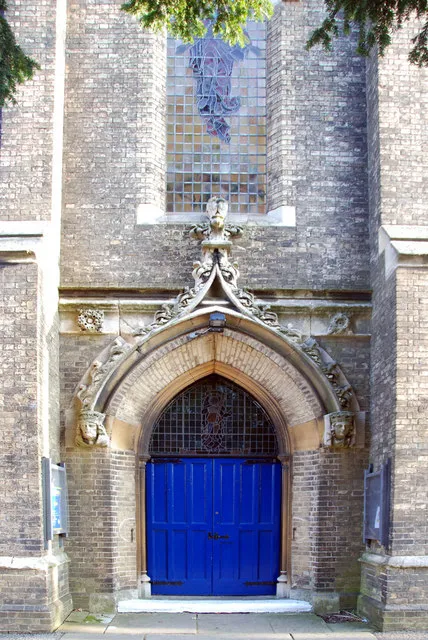
Photo: Chris L L, CC BY-SA 2.0, via Wikimedia Commons
There was a time when a British front door was a modest thing: a slab of wood, a letterbox, perhaps a slightly judgemental brass knocker. Now it is a communications hub. By 2026, the average porch has become a cross between a parish noticeboard and a very small border checkpoint, staffed entirely by stickers. The message is clear: we are open to parcels, selected neighbours and possibly cake, but absolutely not to a man with a clipboard asking whether we have considered switching energy supplier.
The front-door sticker has evolved. It is no longer enough to scrawl ‘No Cold Callers’ on the back of an old envelope and hope for the best. We are living through a laminated arms race, and the stakes are nothing less than the sanctity of the hallway.
The rise of the doorstep manifesto
Drive down any residential street and you will see the new breed of door furniture. There is the classic, noble ‘No Cold Callers’ sticker: small, dignified, usually slightly peeling at one corner. Then there is the multi-panel warning, a sort of domestic terms and conditions listing every category of human who is not welcome. No hawkers. No canvassers. No religious callers. No charity bag collectors. No doorstep sellers of any description. No ‘quick chat about your broadband’. No ‘just a survey’. No ‘we’re in the area’. No ‘hello, I’m not selling anything, but…’
Some signs go further. ‘No Cold Callers, No Politicians, No Proseletyzers’ — the spelling often adding a certain rogue charm. ‘You are being watched by a Ring doorbell and a nosy neighbour called Brenda.’ ‘No salespeople. No exceptions. The cat is not interested either.’ One door in Kent reportedly sports a laminated A4 sheet reading: ‘We do not buy things at the door. We do not donate at the door. We do not discuss the door. Please respect the door.’
It is hard not to admire the commitment. This is no longer signage; this is a lifestyle.
A taxonomy of the British doorstep notice
Experts in the field — by which I mean anyone who has ever walked a street and silently judged a doormat — recognise several distinct types.
The Minimalist: a single, tasteful vinyl sticker. It says ‘No Cold Callers’ in a sensible font. It is the equivalent of a firm handshake and a closed door.
The Bureaucrat: a laminated list, often with bullet points, occasionally with a small clip-art hand holding a stop sign. It suggests the household has been burned before and now requires all visitors to submit to a doorstep compliance procedure.
The Passive-Aggressive Masterpiece: a homemade sign with a paragraph of backstory. ‘We have already given to your charity. We have already switched suppliers. We have already found religion. Please do not ring the bell. The baby is asleep. The dog is awake. Go away.’
The Ironist: ‘No Cold Callers (unless you have cake).’ This is the British compromise: firm boundaries, but not so firm that you miss out on Victoria sponge.
The Escalation: the sticker that has spawned secondary stickers. ‘No Cold Callers’ above a ‘Beware of the Cat’ sign above a ‘Delivery Drivers: Please Leave Parcels in the Box’ notice above a small drawing of a fox with the words ‘He knows what he did.’ It is a whole doorstep ecosystem.
The unwritten etiquette of the sticker war
Like most British institutions, the front-door sticker is governed by rules that no one has written down but everyone instinctively understands. You may not peel off someone else’s sticker, even if it is wonky. You may not ask what happened to make them install it, unless you are a close friend and have brought wine. You absolutely may not ring the bell if the sign says no cold callers and you are, in fact, a cold caller. That is not salesmanship; that is a breach of the peace.
There are exemptions. Parcel couriers are sacred. Neighbours with a spare pint of milk are generally allowed. Trick-or-treaters on 31 October operate under a seasonal dispensation, though the sticker owner may still pretend not to be in. Carol singers are a grey area; in some streets, a ‘No Cold Callers’ sign is understood to mean ‘no carols before December, and none after Boxing Day’. A child selling raffle tickets for the village hall is usually permitted, provided they are accompanied by a parent and do not attempt to upsell.
The real art is in the wording. A sign that lists fourteen categories of prohibited visitor can feel like a legal injunction; a sign that says ‘No cold callers, thanks — but parcels and neighbours are always welcome’ feels like a friendly border policy. The difference is roughly the difference between a bouncer and a concierge.
Tiny fortresses, very British fury
The deeper truth is that the doorstep sticker is a small exercise in sovereignty. The hallway is the last bit of Britain we truly control, and the sign is our flag. It says: this is not a public thoroughfare; this is a home. In an age of scams, dodgy broadband pitches and men who claim to be ‘just passing’ while holding a clipboard, a laminated notice is a form of self-defence. It is also a form of theatre.
Because the sticker arms race is never really about security. It is about status. Neighbour one has a polite ‘No Cold Callers’ sticker. Neighbour two has a bespoke vinyl sign with a logo. Neighbour three has a full-colour A3 warning with a QR code that, if scanned, presumably leads to a page explaining why you should not have scanned it. The message is not simply ‘go away’; it is ‘go away in a more organised fashion than next door’.
There is dark comedy in the escalation. A ‘No Cold Callers’ sticker placed directly above a ‘Please Leave Parcels with Neighbour’ sign is a beautiful study in contradiction. A sign warning ‘No Salespeople’ on a door that has clearly just received a takeaway is a reminder that even the most fortified household still needs dinner. And a laminated notice reading ‘No Cold Callers. No Canvassers. No Surveys. We are not interested’ fixed at eye level on a door with a glass panel is essentially an invitation to peer in and see if they are telling the truth.
How to win the sticker war without losing the street
The temptation, as ever, is to overdo it. Once you start laminating, it is a short step to a ring binder of signage and a designated ‘visitor processing area’. The trick is restraint. Choose one clear line. Put it where people can see it. Make it firm but not forensic. Leave a loophole for parcels, neighbours and anyone holding a sufficiently good cake.
And if you are the one ringing the bell, read the door. If it says no cold callers, do not be the person who says, ‘I know it says no cold callers, but…’ There is no ‘but’. There is only a sticker, a doorstep and a nation quietly judging you through the net curtains.
In 2026, the British front door is no longer just an entrance. It is a statement, a boundary and — if you have gone for the full multi-panel laminate — a slightly unhinged work of art. We are a nation of tiny fortresses. And our stickers are magnificent.