Shelf Life: Inside Britain’s Gloriously Ruthless Charity Shop Bric-a-Brac Hunt
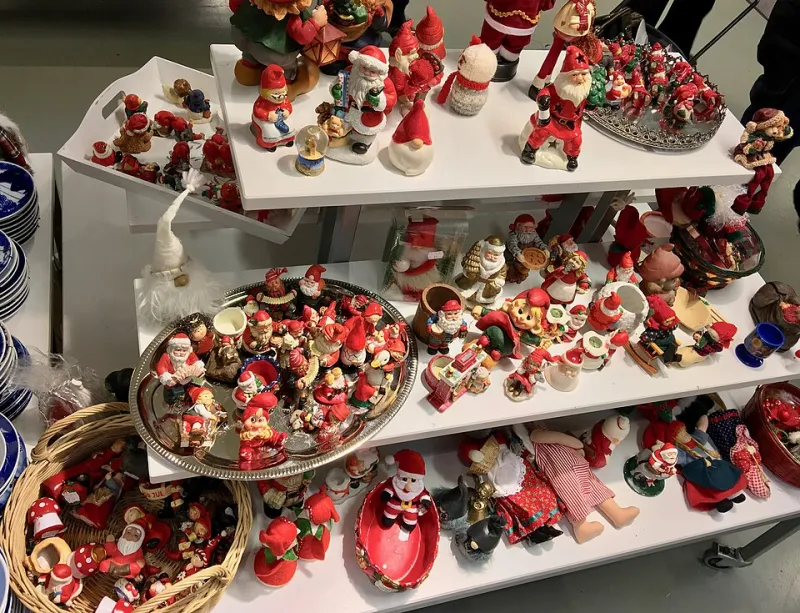
Photo: Wolfmann, CC BY-SA 4.0, via Wikimedia Commons
Charity shops have always been theatres of the unexpected. You go in for a paperback and come out with a wicker hamper, a VHS of a musical you have never heard of and a vague sense that you have helped somebody. But the bric-a-brac shelf is different. It is not retail. It is a contact sport played in soft shoes and polite smiles, where the prize might be a 50p porcelain unicorn with a chipped horn and the faint whiff of someone else’s conservatory.
On a damp Tuesday in November, the shelves are stacked with the usual cast: sad clowns, commemorative tins, a brass duck with anger issues, a mug that says ‘World’s Best Grandad’ and a single candlestick that has clearly been separated from its twin by a messy divorce. Somewhere in the middle of it all is the thing you did not know you needed. And somebody else is already reaching for it.
The Fifty-Pence Unicorn and Other Mythical Beasts
Every charity shop has its legends. The 50p unicorn is the one that got away: a bone-china beast, perhaps a little dusty, perhaps with a repaired ear, priced by a volunteer who thought it was a donkey. It is not about monetary value, although the resellers will tell you otherwise. It is about the thrill of the find — the sudden, unreasonable joy of spotting something ridiculous and knowing it is yours for less than a packet of crisps.
The bric-a-brac shelf is a museum of British domestic life, curated by accident. Here is a Coronation mug from a year nobody remembers. Here is a Toby jug with the face of a man who clearly owed somebody money. Here is a shell-shaped ashtray from Scarborough, a wooden spoon with ‘Kitchen’ burned into it, and a small ceramic hedgehog that has no obvious purpose but feels important. You do not need any of it. That is not the point.
Know Your Shelves, Know Your Fellow Hunters
There are types. First, the Skimmer: in and out in four minutes, hands moving like a card sharp, eyes flicking for maker’s marks and mid-century silhouettes. Then the Cabinet Watcher, who has learned that the good stuff is not always on the shelf but behind the glass, and who will stand nearby pretending to examine a tea towel until a volunteer produces the key.
You will also meet the Nostalgia Blinker, who is only there for something that reminds them of their nan’s front room. They are not competition, unless the thing you want is exactly that. And then there is the Reseller in Disguise, wearing a sensible fleece and carrying a tote bag that says ‘Book Lover’. They will tell you they are buying for a friend. The friend is eBay.
A good charity shop volunteer — and they are the backbone of this entire economy — can spot all of these people within seconds. They also know when the good stuff hits the shelf. In one market town, the manager keeps a mental ledger of donations and releases the ‘nice bits’ on Thursday mornings, just after the school run. In another, the best bric-a-brac appears after lunch on Saturdays, when the weekend sorters have had a chance to argue about whether the ornamental owl is worth £3 or £4.
The Gatekeepers of the Glass Cabinet
The volunteer is not your enemy. The volunteer is the referee, the archivist and the bouncer. They have seen things. They have watched a woman in a cagoule try to buy a single saucer from a three-piece tea set. They have been asked, with a straight face, whether the shop will take £1.50 for a Wedgwood plate because ‘it’s a bit dusty’. They have developed a look — part pity, part warning — that can stop a queue in its tracks.
And they price in mysterious ways. A plain white mug might be 20p. A slightly wonky jug might be £8 because it ‘looks old’. A framed print of a fishing boat will be £2, while an identical one two shelves down is £6 because the volunteer liked the frame better. You do not argue. You pay, you smile, and you carry your prize to the till like a cat with a mouse.
Etiquette, Elbows and the Unwritten Rules
The unwritten rules are strict. Do not hover. Do not ask ‘is this all you’ve got?’ as if the back room is a secret vault. Do not block the shelf with your body while you take a phone call about whether the brass duck is ‘worth it’. And never, ever take something out of another person’s hand, even if it is a commemorative plate of Diana and you have been looking for one since 1997.
There is a code of conduct, and it is mostly about pretending you are not in a competition. You will hear the phrase ‘oh, that’s lovely’ spoken through gritted teeth. You will see two people reach for the same porcelain owl and then perform a small, tragic ballet of hesitation. The winner is usually the one who says ‘no, no, you have it’ — and then buys it anyway when the other person puts it down.
Why We Keep Coming Back
Because the bric-a-brac shelf is not really about the objects. It is about the possibility. The possibility that today is the day you find the 50p unicorn, the ridiculous lamp, the book you had as a child, the thing that makes you laugh on a grey afternoon. It is a low-stakes treasure hunt with a tea shop at the end, and it is one of the last places in Britain where you can buy something pointless and feel genuinely cheerful about it.
So next time you are in a charity shop, approach the bric-a-brac with respect. Bring your elbows, but keep your manners. And if you see a porcelain owl with a chipped ear and a price tag that makes no sense, do not ask questions. Just pay the 50p and walk away quickly. You have won.