The Bench, the Bylaw and the Bitter Footnote: Britain’s Parish Newsletters Are Secretly Brilliant
Every so often, a folded A4 sheet arrives through the door and changes the emotional weather of an entire village. It has no glossy cover, no celebrity interview and absolutely no intention of being charming. It is the parish council newsletter, and it is terrific.
This is literature in the way a hedge is topiary: technically shaped, faintly hostile and absolutely full of secrets. The newsletter is where local democracy meets the photocopier, where a unpaid clerk can write “the matter of the bench remains ongoing” and every reader immediately knows which bench, which green and whose bottom is at the centre of it all.
The photocopier is the printing press
A parish newsletter does not arrive; it flops. It is usually produced in a font that suggests the clerk has a favourite setting and will not be moved from it. There may be a clip-art image of a leaf. There may be a table that has gone rogue. Somewhere near the bottom, the clerk’s email address will be printed in a size that implies they would rather you didn’t use it.
And yet this scruffy bulletin is a genuine cultural artefact. It is anti-algorithm. It has no SEO strategy, no engagement metrics and no idea what a content pillar is. It will tell you about the grit bin whether you like it or not. It is the last place in Britain where a sentence like “residents are reminded that the bus shelter is not a storage facility” can be published without irony, apology or a legal review.
A field guide to the code
To the untrained eye, the parish newsletter is a list of meetings and mild announcements. To the trained eye, it is a serialised novel with council minutes as footnotes. Here is a rough glossary for the uninitiated.
“Residents have expressed concern.” Someone has sent a furious email at 11.47pm. The concern is not mild. The concern has attachments.
“The bench on the green has been temporarily removed for safety.” A bench war is underway. There will be a follow-up item. There will be a working group. There will be a photograph of the bench in happier times.
“Dog owners are reminded…” This is never a reminder. It is a warning shot. The newsletter knows what you did, and it knows you own a spaniel called Biscuit.
“Any Other Business.” The licensed bare-knuckle segment of local democracy. No agenda item has ever been more loaded.
“The clerk will investigate.” Nobody will investigate. The clerk has enough on their plate with the photocopier and the parish website that hasn’t been updated since the queen died.
“A working group has been formed.” Three people will meet in a shed. One will bring a flask. Nothing will be resolved, but the minutes will be immaculate.
“The budget was discussed.” The precept is going up by three per cent and somehow the hanging baskets are involved.
The grudges are the plot
Every newsletter has narrative arcs. A pothole becomes a saga. A speed bump becomes a constitutional crisis. A commemorative bench becomes Chekhov’s bench: if it is mentioned in the September edition, by November someone will have measured it and someone else will have written in to say the measurement is wrong.
The genius of the form is that it never admits it is funny. It reports village feuds with the flat tone of a war correspondent who has seen too much. “A member of the public asked whether the allotment gate could be left open during daylight hours. The council agreed to review the matter.” Translation: Dave has been at it again, and the gate is now a symbol of everything that has gone wrong since 2019.
The bylaws are the punchlines
Parish newsletters love a bylaw. They love the word “accordingly”. They love a sentence that begins “In accordance with standing orders” and ends with someone being told to move their wheelie bin. The effect is a kind of accidental poetry: bureaucratic, precise and deeply petty.
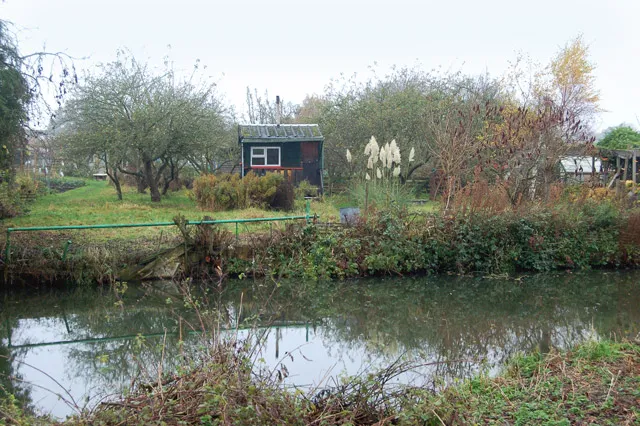
Allotment sheds must not exceed a certain height. Cycling on the pavement is prohibited. The grit bin is not a toy. These are not just rules; they are running jokes with legal force. And because the newsletter has to print them, we get to enjoy the music of local government at its most magnificently straight-faced.
How to read one properly
First, read the apologies for absence. Who is missing? Why? Has Cllr Hodgkin been absent for three meetings in a row? Is there a rift? There is always a rift.
Second, count the words devoted to each item. The pothole gets two lines; the bench gets six paragraphs. That tells you where the real drama lives.
Third, look at the punctuation. A semicolon in a dog-fouling notice is cold fury. An exclamation mark in a bin announcement is a cry for help. A sentence that uses the word “allegedly” means a solicitor has been in touch.
Finally, check the photo credits. “Photo: Cllr B. Hodgkin” means Beryl has a new phone and the village has a new visual language.
Why we should protect them
The parish newsletter is local democracy at its most human: petty, funny, occasionally useful and entirely unbothered by whether you share it. It is the last great work of unhinged literature because it is written by people who know exactly who you are and where you live. It is the opposite of a brand. It is a village, photocopied.
So next time one flops through the door, make tea, sit down and read it like a novel. Start with the bench. It always starts with the bench.