Lamppost Laughs: Inside the Scruffy Sticker Underground Making Britain Smile Again
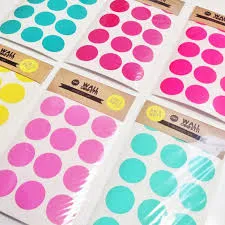
Photo: AbiandElla, CC BY-SA 4.0, via Wikimedia Commons
Somewhere between a badly drawn pigeon and a QR code for a lost cat, Britain is having a very small art movement. It is stuck to lampposts, bus shelters, the backs of pedestrian-crossing buttons and that one bin outside the leisure centre. It is cheap, wonky and frequently hilarious. It is sticker art, and it is making our streets feel less like a council contract and more like a place where somebody lives.
This is not Banksy. Nobody is cutting a stencil at 3am and selling a print for £20,000. This is someone called Dave drawing a sad chip on a sticker and slapping it on a lamppost in Sheffield. It is a cartoon of a local cat with an opinion about parking. It is a label that says ‘this bin is doing its best’. It is nonsense, and nonsense is having a moment.
A very small scene
Sticker art has been around for decades, but in 2026 it feels especially alive. Maybe because everything else is so polished. Maybe because a sticker is the cheapest way to say something in public without asking permission. Maybe because we are all a bit tired of scrolling and would like to look at something real, even if the something real is a laminated illustration of a pigeon wearing a hat.
The scene is not organised. There is no membership card. There is no annual awards ceremony, although there should be, if only to see who wins ‘Best Use of a Lamppost in a Supporting Role’. There are just people with a printer, a pack of blank labels and a silly idea.
A highly unscientific taxonomy of sticker genres
The Daft Slap. A quick, hand-drawn gag stuck at eye level. Usually a pun, often involving a local landmark, always slightly worse than it thinks it is. Example: a drawing of a traffic cone with the caption ‘promoted’.
The Serial Lamppost Cartoon. A recurring character that appears across a neighbourhood, one sticker at a time. You might spot a small frog in a raincoat on Monday, then the same frog eating a chip on Wednesday. It is a soap opera for people who walk to the shops.
The Micro-Meme. A tiny sticker that distils a very online joke into something you can see on a bus stop. It is the visual equivalent of a snorted laugh.
The Civic Surrealist. A sticker that gently mocks the infrastructure it is attached to. ‘This lamppost is doing its best.’ ‘No thoughts, just bollards.’ It is affectionate, not angry. It is the sort of joke that makes a council worker smile before scraping it off.
The Hyperlocal In-Joke. A sticker that makes sense only to people in one postcode. A drawing of a specific kebab shop. A reference to a notorious roundabout. A portrait of a local dog that everyone knows by sight. These are the stickers that make a place feel like a place.
The Anti-Sticker Sticker. A sticker that says ‘no stickers’ or ‘please stop’. It is either ironic or deeply sincere. Either way, it is stuck to a lamppost, which is the joke.
Meet the makers (who would rather not be named)
Mara, 34, from Bristol, has been making stickers for three years. She prints them at home and sticks them up on walks. ‘I like that it’s not a career,’ she says. ‘Nobody is asking me for a bio. Nobody is asking me to monetise my personality. I just draw a daft little ghost and put it on a bin.’
Her favourite sticker was a drawing of a seagull holding a chip with the caption ‘mine now’. ‘I saw someone take a photo of it,’ she says. ‘That was it. That was the whole reward. I didn’t need a gallery.’
Jez, 41, from Leeds, collects photos of stickers rather than making them. He has a folder on his phone called ‘lamppost business’. ‘It’s like birdwatching,’ he says. ‘You start noticing things. You see the same character appear across the city. You start wondering who’s doing it. It’s a mystery, but a nice one.’
A woman in Sheffield, who asks to be called ‘the lamppost lady’, makes tiny cartoons of local landmarks. ‘I don’t want to be famous,’ she says. ‘I want someone to be walking to work in the rain and see a stupid drawing of the town hall and feel slightly better for three seconds. That’s the job.’
The etiquette bit
Sticker art is at its best when it is a gift, not a plague. So here is a rough guide to not being a menace.
Do not sticker homes, memorials, places of worship, private cars or anything that someone has to maintain with their own money. A lamppost is fair game-ish. A grandmother’s front door is not.
Never cover road signs, safety information or anything a person needs to read to stay alive. If your sticker could cause an accident, it is not art. It is a hazard with a joke on it.
No hate, no adverts, no QR codes that lead to scams, no ‘edgy’ nonsense that is just cruelty with a laminate finish. The best stickers punch up, or sideways at a bollard. They do not punch down.
Leave a margin. If someone else has already stickered a spot, do not cover their work. Stick next to it. It is a conversation, not a takeover.
If someone asks you to remove a sticker from their property, remove it. A sticker is a guest, not a landlord.
Why tiny nonsense matters
Britain in 2026 is loud. The news is loud. The adverts are loud. The politics is loud. Even the quiet bits are loud, because someone has put a podcast on speakerphone on the bus. In all that noise, a small, daft sticker feels like a whisper. It says: I was here, I was bored, I made a joke, I hope you like it.
That is the ratbag tradition, really. Not grand rebellion. Not a manifesto. Just a small act of public nonsense. A sticker that makes a lamppost look like it has eyebrows. A cartoon of a pigeon with a chip. A label that says ‘cheer up, mate’ on a bin.
It will be scraped off. That is part of the charm. Sticker art is temporary, uncurated and slightly grubby. It belongs to everyone and no one. It does not ask for funding. It does not have a press release. It just appears, makes you smile, and then gets replaced by a sticker of a frog in a raincoat.
And honestly, in a country that sometimes feels like it is being managed by a spreadsheet, that is a public service. Long live the scruffy little sticker. May your edges curl, your ink run and your lamppost always have eyebrows.