Splat's Life: The Rogue Tarmac Artists Beating the Council at Its Own Pothole Game
There is a stretch of road near me that has been described, in a local Facebook group, as 'more of a suggestion than a surface'. It has been like that for so long that the potholes have names. One is called Kevin. Kevin is currently the size of a small wheelie bin and, according to one neighbour, has started collecting rainwater and a faint sense of despair.
This is Britain in 2026: a nation held together by duct tape, tea and the quiet fury of people who have phoned the council four times about the same crater. But something has shifted. Where once we grumbled and swerved, a new breed of road-fixers has emerged. They are the guerrilla tarmac artists, the late-night splatters, the people who have decided that if the highway authority won’t do it, they jolly well will — with a bag of cold-lay, a hi-vis vest and a deeply questionable understanding of liability law.
The Splat Heard Round the Village
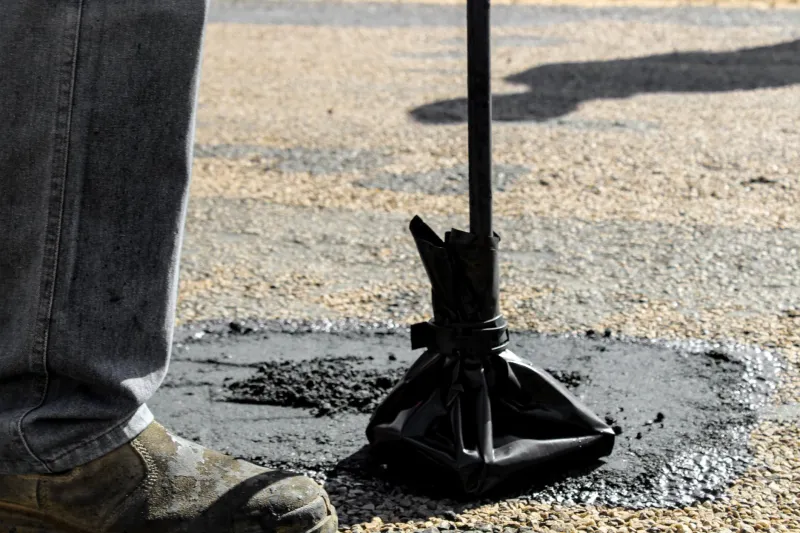
It usually starts with a pothole that has crossed a line. Not just any pothole — the kind that makes your suspension wince and your shopping rattle. Someone, often a retired bloke with a shed full of useful nonsense, decides enough is enough. They buy a bag of tarmac repair mix, which is available at any garden centre for roughly the price of a round of drinks, and they get to work on a Sunday morning while the rest of us are still arguing about the crossword.
The result is rarely beautiful. A rogue tarmac repair looks like something a large bird might have dropped from a great height. It is lumpy, it is slightly proud of the surface, and it has the general energy of a plaster cast applied by an enthusiastic child. But you know what? It holds. It stops the rattle. And it has an unmissable air of defiance about it, like a two-fingered salute rendered in bitumen.
A Brief Taxonomy of Rogue Repairs
Not all pothole vigilantes are created equal. I have spent an unhealthy amount of time observing this ecosystem, and I can confirm there are several distinct types.
The first is the Splatterer: a person who has watched one YouTube tutorial and now believes they can resurface the M6. Their work is characterised by enthusiasm over precision, and they are best identified by the fact that their repair is slightly larger than the actual hole.
The second is the Artist: someone who fills a pothole and then paints it. Sometimes it is a flower. Sometimes it is a rude shape. Occasionally it is a tiny scene of a diver going into a puddle, which is either a Banksy or a cry for help. In 2026, the painted pothole has become a local landmark; tourists have been known to photograph them.
The third is the Phantom Professional: the person whose repair is so neat, so flush, so beautifully compacted that you suspect they might actually know what they are doing. They never leave a name, but they leave a surface so smooth it makes the council look bad. Which, to be fair, is not difficult.
The Council’s Whack-a-Mole Problem
Let us be fair to the councils. Britain’s road network is old, expensive and crumbling, and local authority budgets have been squeezed so hard that the money for pothole repairs is now essentially a rumour. Highways teams are stuck in a permanent game of whack-a-mole, patching the worst holes while three new ones open up behind them.
But fairness only stretches so far. When a pothole has been reported eleven times and the council’s response is a fresh coat of paint around the rim, people start to get creative. And when the council then threatens to remove the rogue repair because it is 'not up to specification', the local mood turns from mild irritation to open rebellion. There is something deeply British about this: we will tolerate a lot, but we will not tolerate administrative pettiness about a hole we have already fixed ourselves.
When Mischief Becomes Art
What makes the pothole vigilantes so endearing is not just their civic spirit. It is the mischief. Filling a pothole is a public service; doing it anonymously, under cover of darkness, with a bag of tarmac and a slightly unhinged grin, is a public service with personality.
One group of neighbours in a village I know of took it in turns to 'adopt' a pothole on their street. They named theirs after a minor local villain and left increasingly elaborate notes for the council, including a small laminated chart tracking the hole’s depth over time. It was passive-aggressive, yes. But it was also community art.
Should We Actually Be Cross?
There is a sensible argument that ad-hoc repairs are dangerous. A badly filled pothole can disguise a deeper problem, or cause water to pool, or confuse other road users. And councils do have a point about liability. If your DIY patch causes an accident, the legal fallout will be as lumpy as your tarmac.
But here is the thing: most people are not doing this to stick it to the man. They are doing it because they commute on that road, their kids cycle on that road, and they cannot wait another winter for a resurfacing schedule that may never arrive. The mischief is a byproduct, not the main event.
The rogue pothole fixers are a symptom of a country that has run out of patience with crumbling infrastructure. They are also, and this is important, quite funny. In a year where things have felt a bit heavy, there is something genuinely uplifting about watching a bloke in a fleece improve the neighbourhood with a bag of cold-lay and a total disregard for process.
The Verdict
So, are the pothole pimpernels heroes or vandals? The honest answer is: a bit of both, and that is precisely why we love them. They are doing what Britain has always done best — cobbling together an imperfect solution, cracking a joke about it, and refusing to be told off by a council officer with a clipboard.
If the highways department wants to reclaim its authority, it could try resurfacing a road once in a while. Until then, the splat is here to stay.